Storm Photography Gear Guide
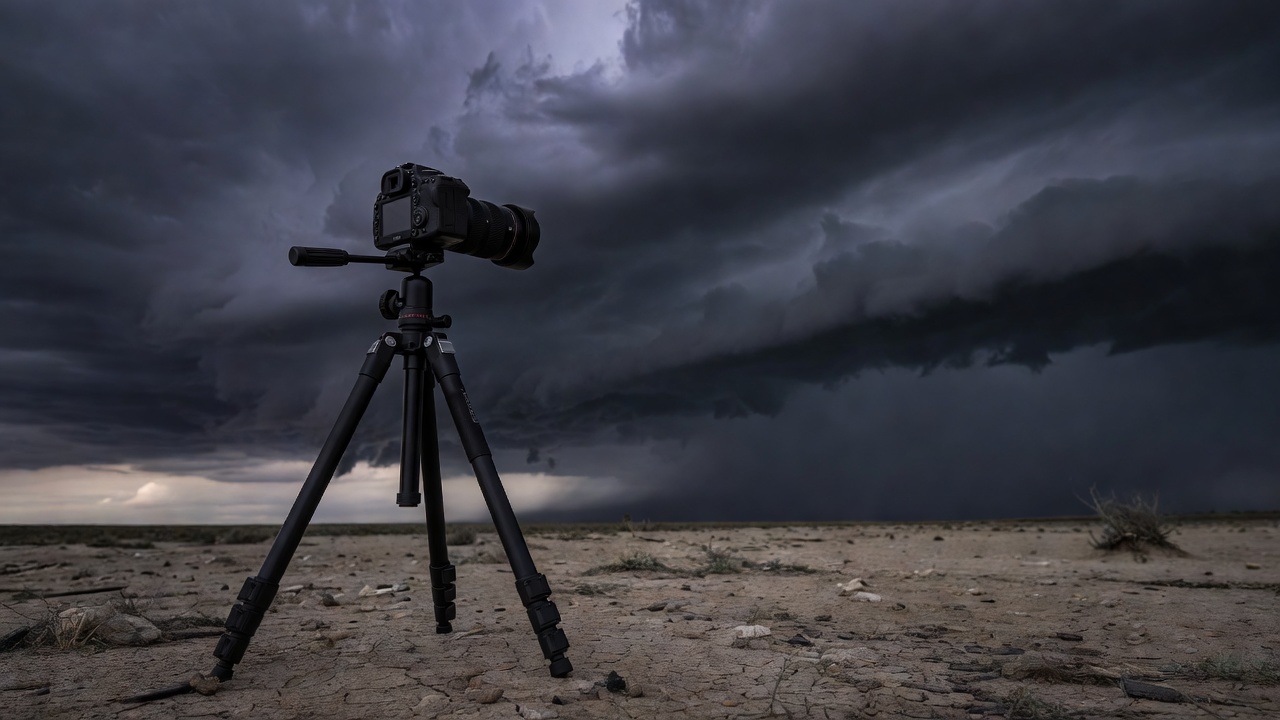
Documenting a severe thunderstorm requires equipment capable of handling massive dynamic range, extreme low light, and unforgiving environmental conditions. When a supercell structure dominates the horizon, standard smartphone cameras fail to capture the immense scale and stark contrast between the blinding white anvil and the pitch-black updraft base. A dedicated photography setup, tailored specifically for extreme weather, is essential to properly document the majesty of the atmosphere.
1. Camera Bodies and Sensors
The foundation of a severe weather photography kit is a modern, high-resolution Mirrorless or DSLR camera body. Full-frame sensors are highly preferred over APS-C due to their superior light-gathering capabilities and noise performance at higher ISOs. Storm environments become exceptionally dark long before sunset due to the dense cloud canopy. A full-frame sensor allows you to push the ISO without introducing excessive grain, ensuring sharp images even in low light.
Dynamic range is arguably the most critical metric for a storm chaser's camera. You are frequently photographing scenes that feature extremely bright, sunlit flanking lines contrasting against impossibly dark storm cores. A camera that can retain highlight detail in the clouds while allowing significant shadow recovery in post-processing (RAW format shooting is mandatory) is vital. High burst rates are generally less important than sensor quality, as most storm structures are photographed using single exposures or timed intervals for time-lapses.
2. Lens Selection
Storms are massive, often spanning tens of miles across the sky. To capture the full structure of a mesocyclone or a sweeping shelf cloud, ultra-wide-angle lenses are essential. A classic focal length range for storm chasers is 14-24mm or 16-35mm. These lenses allow you to document the towering vertical extent of the storm while including compelling foreground elements like rural roads, abandoned barns, or wind turbines, providing necessary scale.
However, an ultra-wide lens will make distant tornadoes appear insignificantly small. Therefore, a standard zoom, such as a 24-70mm, is incredibly versatile for tighter framing of wall clouds and developing funnel clouds. For detailed shots of tornadoes on the ground or intense localized hail cores, a telephoto lens in the 70-200mm range is required. High-quality glass with wide apertures (f/2.8) is beneficial, but since most structural landscape shots are taken at f/8 to f/11 for maximum depth of field, optical sharpness across the frame is the priority.
3. Lightning Triggers and Filters
Capturing daytime lightning is nearly impossible relying on human reaction time alone. A dedicated lightning trigger is an optical sensor that mounts to the camera's hot shoe and connects to the remote shutter port. When the sensor detects the rapid infrared burst of a lightning channel illuminating, it triggers the shutter in fractions of a millisecond. High-end triggers allow for adjustable sensitivity to filter out sheet lightning and focus on distinct cloud-to-ground strikes.
To maximize the success rate of a lightning trigger during daylight hours, photographers utilize Neutral Density (ND) filters. By placing a 3-stop or 6-stop ND filter over the lens, you can artificially lengthen the exposure time (e.g., to 1/4 or 1/2 second) without overexposing the bright sky. This longer window drastically increases the chances that the camera shutter is fully open during the entire duration of the multi-stroke lightning flash.
4. Support and Weather Sealing
A flimsy travel tripod will be immediately blown over by the powerful inflow winds rushing toward a supercell. Storm chasers require heavy-duty, carbon fiber or aluminum tripods with a wide, stable footprint and a mechanism to hang counterweights (like a heavy camera bag) from the center column. A robust ball head with a high load capacity ensures the camera does not slip or vibrate during long exposures.
Finally, environmental protection cannot be overstated. High wind drives rain horizontally, and fine dust is kicked up constantly. Your camera body and lenses must feature robust internal weather sealing. Even with sealed gear, custom-fitted rain covers or dedicated silicone housing sleeves are necessary investments. Keep an abundant supply of microfiber cloths easily accessible, as constantly wiping wind-driven mist off the front lens element is a frustrating but unavoidable reality of storm photography.