Storm Chasing Safety Protocols
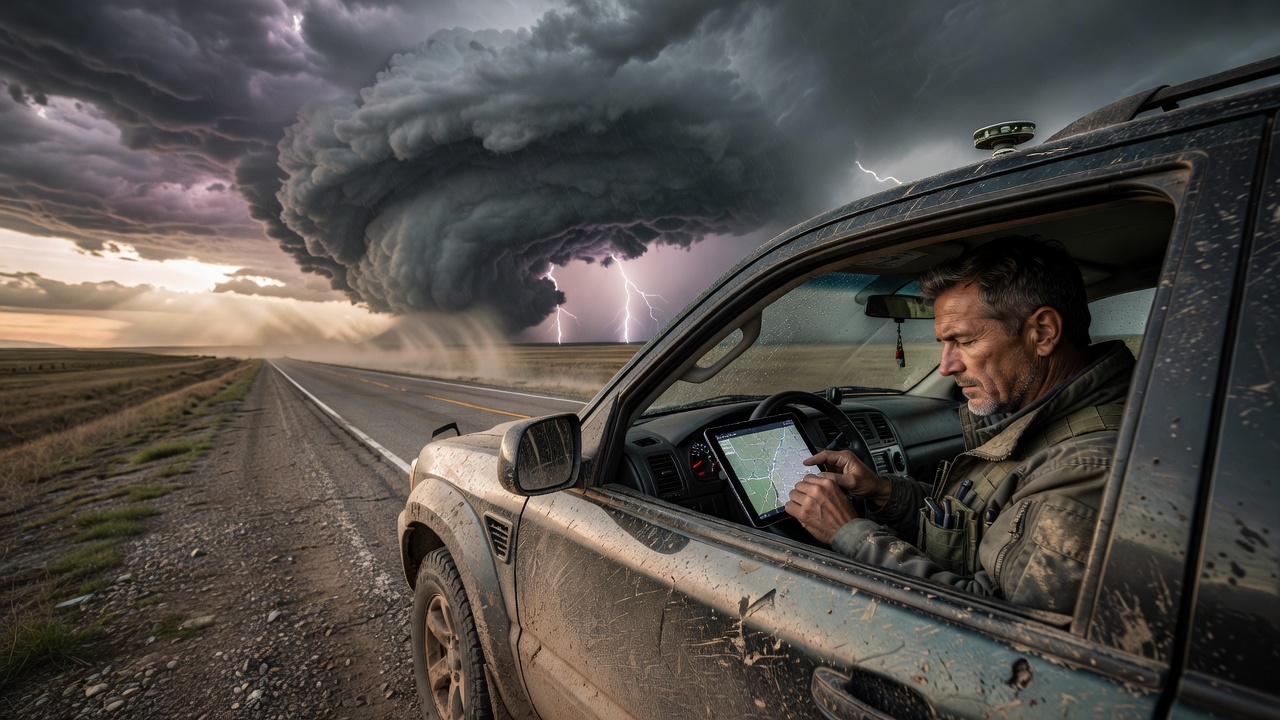
The allure of capturing nature at its most extreme brings thousands of enthusiasts to the Great Plains every spring. However, the environment surrounding a tornadic supercell is chaotic, rapidly changing, and highly lethal. Surviving the chase is not merely about possessing a durable vehicle; it requires a disciplined methodology, hyper-vigilant situational awareness, and an unwavering commitment to predefined safety protocols. Complacency is the storm chaser's greatest enemy.
1. Escape Routes and Positioning
The golden rule of storm chasing is to always have at least two viable escape routes. Supercells typically move from the southwest to the northeast, meaning the safest viewing position is generally to the southeast of the main updraft. From this vantage point, you remain out of the forward-flank precipitation core (heavy rain and hail) while enjoying an unobstructed view of the action area. However, storm motion can suddenly deviate. Right-turning supercells pose a massive threat to chasers who position themselves too closely to the storm's projected path.
Before committing to a viewing location, you must verify road networks. Never position yourself on a dead-end road, and heavily scrutinize dirt or unpaved roads. In states like Kansas and Oklahoma, a dirt road can transform into impassable, axle-deep mud within seconds of a torrential downpour. Getting stuck in the path of a mesocyclone is a catastrophic failure of planning. Maintain a constant mental map of where south and east highways are located to facilitate an immediate, rapid exit.
2. The Dangers of Core Punching
"Core punching" is the highly dangerous practice of driving through the storm's precipitation core—heavy rain and massive hail—to reach the updraft base on the other side. This is an extraordinarily risky maneuver that should be avoided by all but the most experienced and heavily armored scientific teams. While inside the core, visibility drops to absolute zero. You are effectively driving blind in a high-stress environment, drastically increasing the risk of high-speed collisions with other panicked drivers, farm equipment, or stalled chaser vehicles.
More insidiously, the core often obscures the "bear's cage"—the rotating heart of the storm wrapped in rain. Core punching frequently leads chasers to suddenly emerge from the blinding rain directly into the path of an obscured, violently rotating wall cloud or a fully mature tornado. The preferred, infinitely safer method is to navigate entirely around the storm's flank, staying in clear air, even if it requires driving an additional thirty miles and missing the initial intercept window.
3. Lightning and Electrical Hazards
While tornadoes capture the headlines, lightning is statistically one of the most consistent dangers in the field. A severe supercell generates thousands of cloud-to-ground strikes per hour. Operating outside the vehicle to set up tripods or clear debris exposes you directly to this lethal threat. Your vehicle acts as a Faraday cage; the metal frame channels the electrical charge of a strike around the occupants and into the ground. Therefore, remaining inside the vehicle with the windows rolled up during intense electrical activity is the safest protocol.
Post-storm environments present equally dangerous electrical hazards. Downed power lines are a frequent consequence of severe winds and tornadoes. Never attempt to drive over a downed line, even if it appears inactive. High-voltage lines can energize the wet ground or your vehicle's chassis, posing an immediate electrocution hazard. If a power line falls on your vehicle, remain inside, call emergency services, and do not attempt to exit unless the vehicle is actively on fire. If you must exit, jump clear with both feet together to avoid creating a circuit with the ground.
4. Road Hazards and Traffic
Surprisingly, the highest probability of injury during a storm chase does not stem from meteorological phenomena, but from traffic accidents. "Chaser convergence" occurs when hundreds of vehicles converge on a single storm, clogging rural two-lane highways. In this chaotic environment, drivers frequently make erratic stops in the middle of traffic lanes, perform illegal U-turns blindly, or drift off the shoulder into deep ditches while looking at the sky rather than the road.
Hydroplaning is another severe risk. Supercells dump immense volumes of water, leading to rapid pooling on roadways. Driving at highway speeds through these standing waters can cause an instantaneous loss of vehicle control. To mitigate traffic hazards, the driver must maintain absolute focus on the road, relying entirely on the navigator/passenger to monitor radar, direct navigation, and handle visual spotting. Communication within the cabin must be clear and calm to manage the cognitive load required to navigate such an intense environment safely.